Where do crappie go in the fall?
In late summer, crappie are still living in the weeds. As the days shorten and water temps drop, many slide off the weed edges onto breaklines, deeper structure and submerged cover like cribs — and they often keep sliding deeper as the weeks go on, out over the basins where they’ll sit through midwinter.
To be clear: there are always fish in the weeds. Some crappie stay shallow all fall and even into ice. But if you’re looking for the big schools, the breaks and basins are where you’ll usually find them. My rule of thumb: find the summer weeds and the nearest deep water — the fish are somewhere in between.
Why fall is the best crappie bite of the year
Fall crappie fishing is my favorite fishing of the entire year. It’s when crappie congregate the most, and because they slide out over deep, open water, they’re easy to detect on electronics. They’re still hungry and aggressive, too — it’s when I land the most trophy fish.
The early-ice bite is hot, but drilling holes to locate big crappie is a lot more work than driving the boat around until they show up on the graph. And every spot you find now pays you back twice: the basins crappie stack up in during late fall are the same basins you’ll find them in at first ice. Put in the work now and you’ll be drilling on fish, not searching for them, in December.
Step one: pick a lake worth fishing
Before I commit to a new lake, I want to know it actually holds a good crappie population. In Minnesota, the DNR LakeFinder or the onX Fish app is my go-to — I pull up the fish survey report, look at crappie numbers and size structure, and eliminate lakes before I ever hook up the boat.
I also look for lakes that are manageable — for me, 1,000 acres or less. Small enough to check every promising basin and transition in a day. On a big lake you can burn an entire trip idling around and never find the school.
The spots: transitions, cribs and deep basins
By the time fall gets rolling, most of the guesswork is gone. Fish that spent all summer scattered through acres of weeds start funneling toward the same deep water — a short list of spots you can idle between in an afternoon.
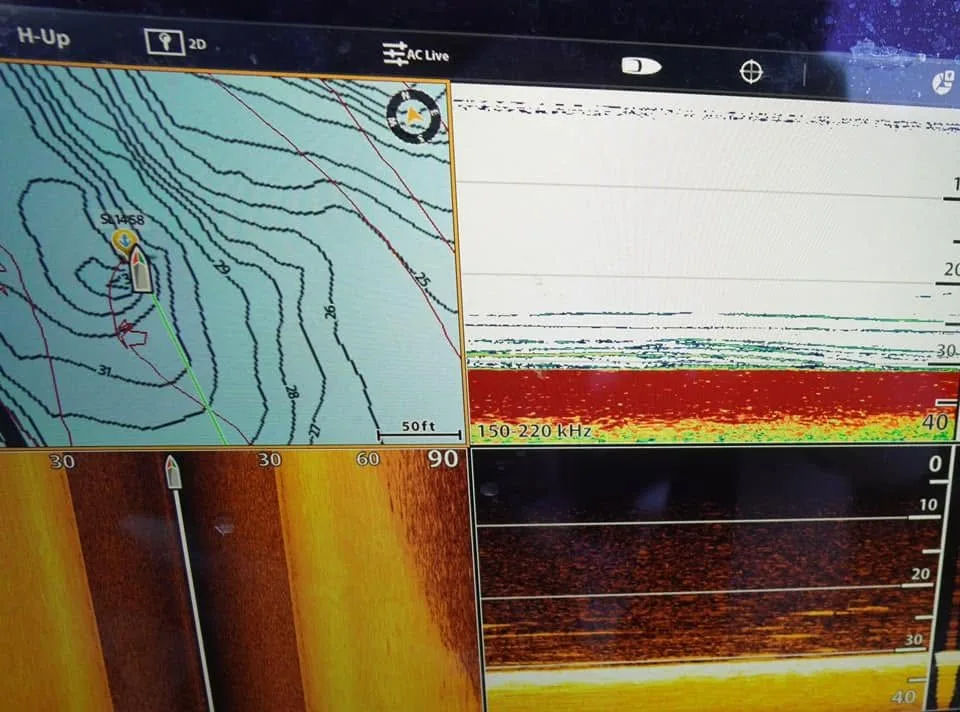
Watch the weather. A cold snap pushes fall crappie deeper in a hurry; a warm stretch pulls them back up the break. Don’t lock in on last weekend’s depth.
Finding fall crappie on sonar
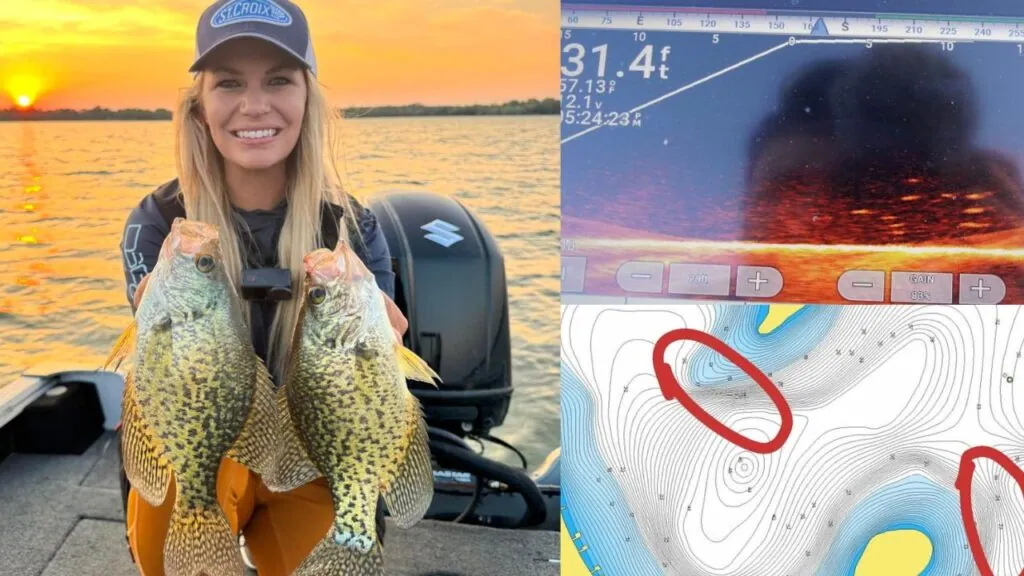
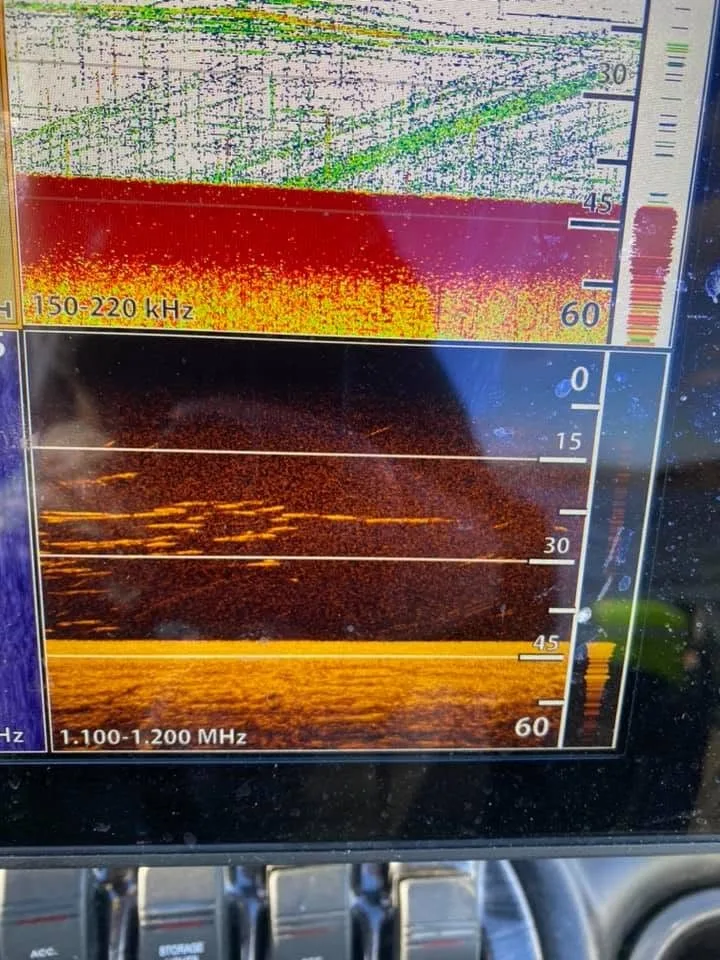
If you have any sonar at all — even basic 2D — you can find fall crappie. The key is looking for suspended marks over the spots above. In most northern and central Minnesota lakes, suspended marks in a basin are a giveaway for bluegill or crappie; crappie marks are larger and more spread out when you’re moving slowly.
If I’m not marking fish, I don’t fish there — I keep moving until suspended marks show up. One late-fall caveat: they aren’t always suspended. Some days the school is hugging the bottom of the basin, so scan top to bottom before you write a hole off.
2D sonar
The most basic technology gets the job done. Look for suspended lines in bigger pods. See them, drop a jig.
Down imaging
Higher resolution. When those marks are big and well spaced, the fish are usually big and active.
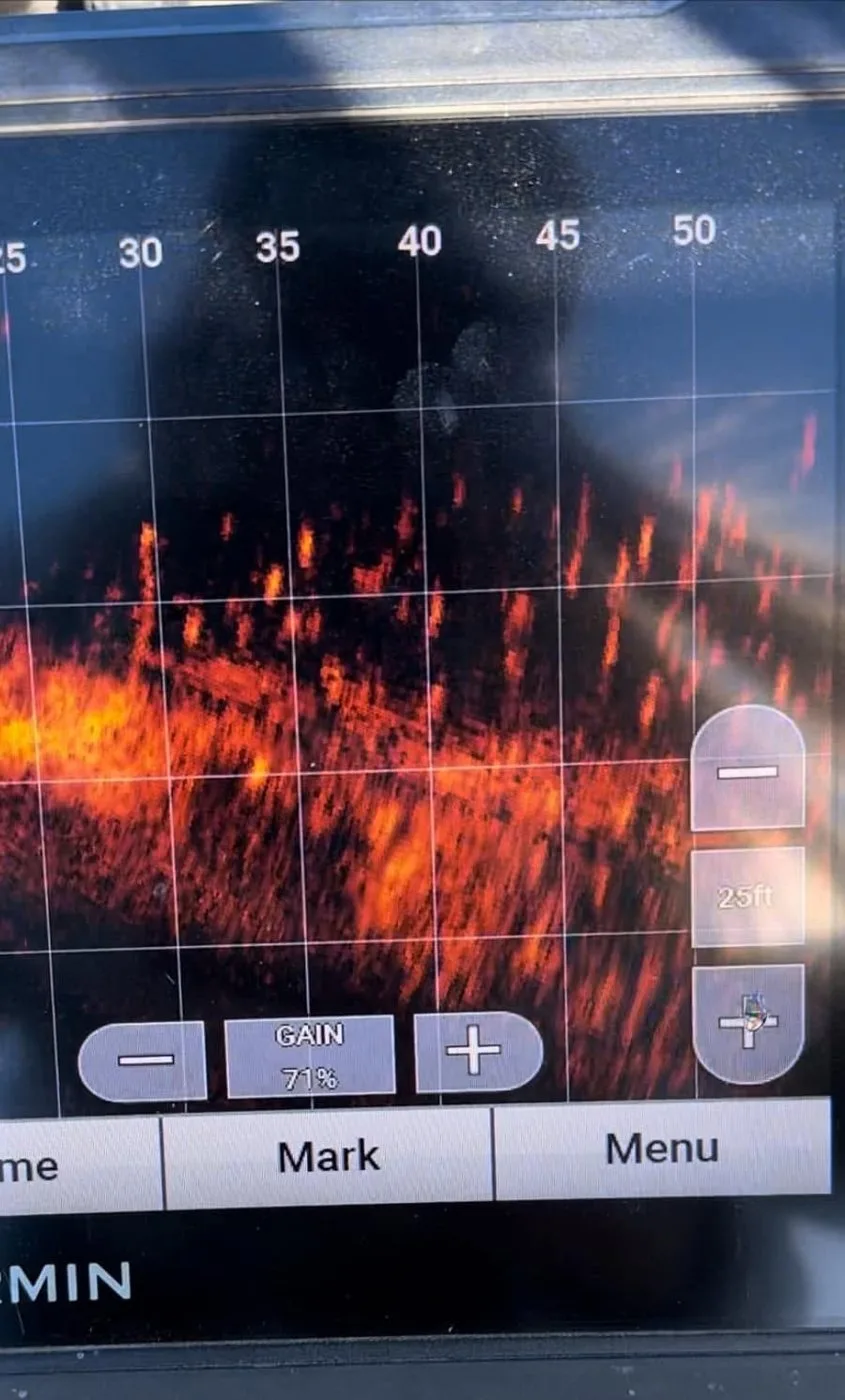
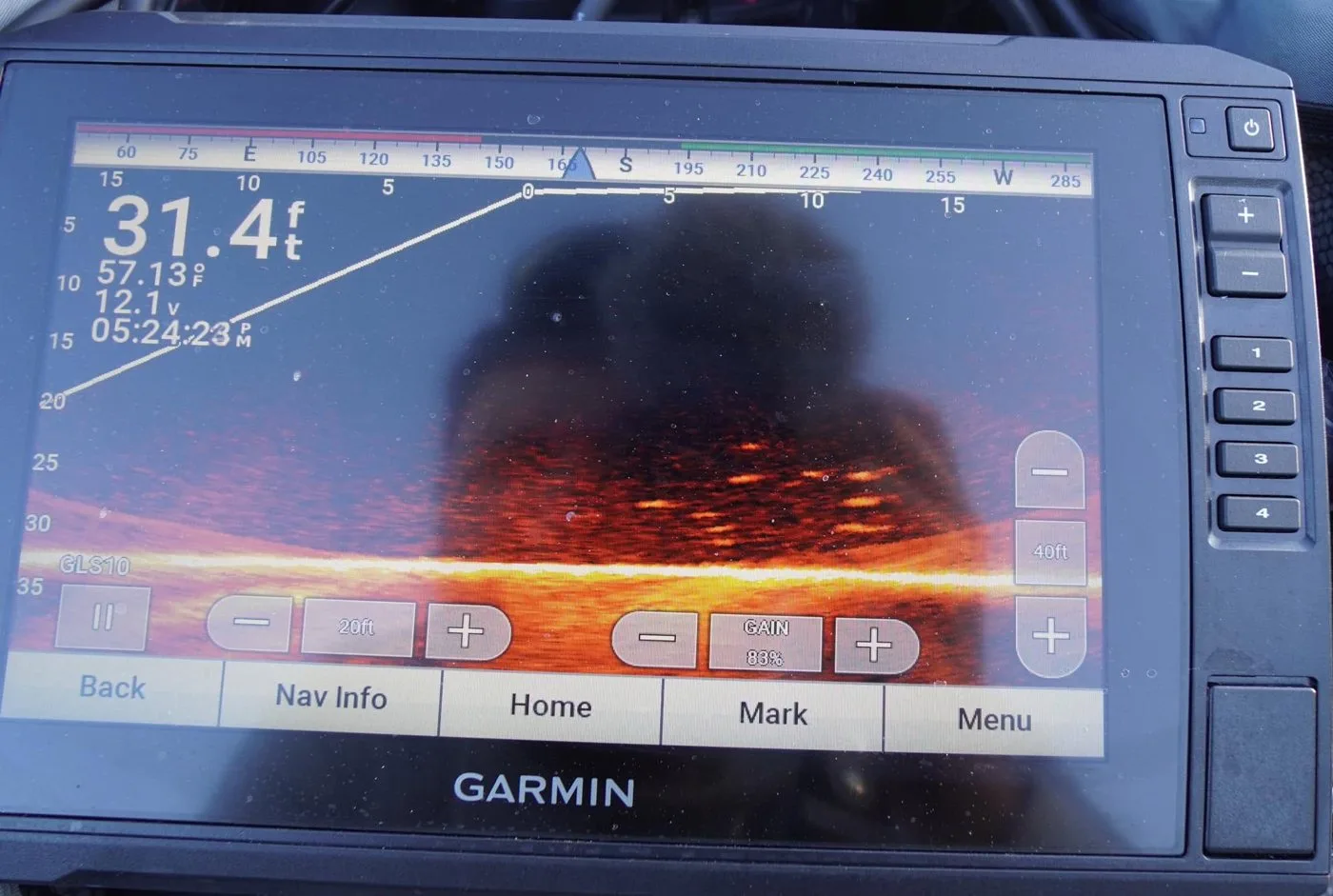
Forward-facing sonar
By far the easiest platform to identify fish on — you can watch where the school moves and how they react to your bait. Not required, but it will save you time.
How I catch them: pitch plastics, painfully slow
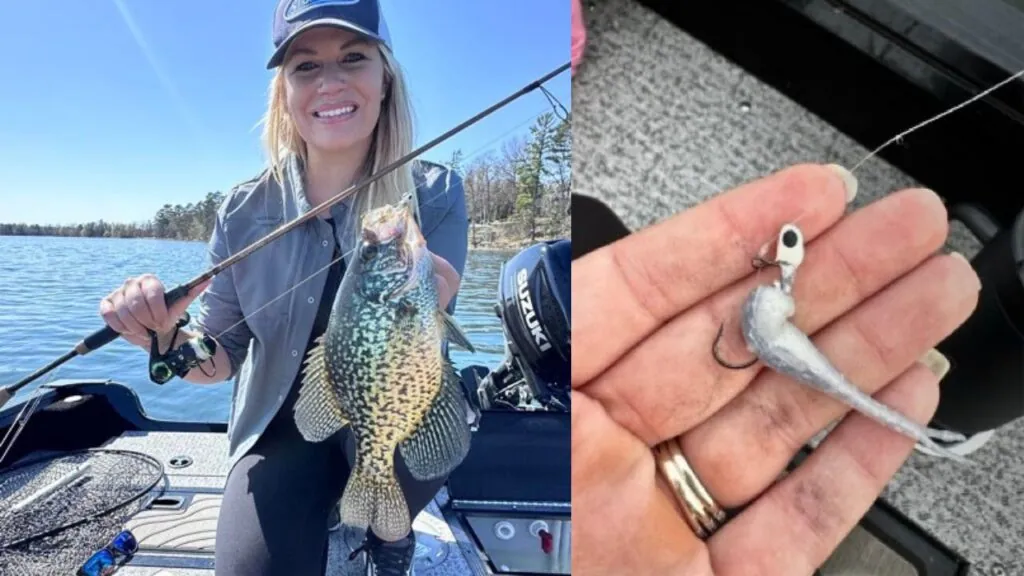
This is how I want to catch them: a plastic — an Itty Bit Slab Hunt’R, Baby Shad or Live Roam’R — on a 1/24 or 1/16 oz Mo’ Glo jighead, cast out past the suspended school, then a painfully slow retrieve right through them. On tougher days I switch to a Head Lock’R jighead in 1/16 or 1/24 oz so the downsized plastic stays pinned and swimming straight.
I reach for plastics over live bait every time I can get away with it. They’re durable, so I spend my time catching fish instead of re-baiting — and I’m never unknowingly dragging around a bare hook. More casts with a bait in the water means more fish in the boat.
Light gear is mandatory. You can’t pitch a 1/24 oz jig on a medium rod — and a long open-water rod has far more leverage than an ice rod, so go light or you’ll rip the jig out of that paper-thin mouth.
Late fall: downsize and go vertical
The biggest fish and toughest bites sometimes require the opposite: the smallest Lindy Tungsten Toad I have — or a short-shank B-Max Live Bait Jig built for minnows — with a crappie minnow, dropped straight down over a deep school. Less lure, more real food, and watch it make a vertical fall to the marks.
When a school won’t commit, a slow, consistent fall pulls the biggest crappie up out of the school in competition.
Best time of day for fall crappie
Dawn, dusk and after dark. Crappie feed in the basins at night all year on zooplankton rising up the water column, so low-light windows are your best odds — especially on clear lakes.
My fall crappie gear list
Light rod, light reel, light line, light jig. The tougher the bite, the smaller the jig — 1/24 to 1/16 oz, never heavier. White, chartreuse and pink are always my starting colors.
| Gear | What I use | Why |
|---|---|---|
| Everyday rod | St. Croix Panfish Series 6’4” LF | Throws about anything and handles the accidental big fish. |
| Finesse rod | St. Croix Panfish Series 6’4” ULF | A noodle with incredible flex for the tiniest baits — telegraphs the lightest bites of the year. |
| Line | 4 lb mono (or 4–5 lb braid to a 4 lb fluoro leader) | The only time of year I like mono — the stretch helps on delicate hooksets. |
| Reel | Any small reel rated for 2–4 lb line | Swaps right onto your ice rods come winter. |
| Jighead | Crappie Pro Mo’ Glo 1/24–1/16 oz | The anchor of my whole program — and my 16” personal-best jig. |
| Tough-bite jighead | Bobby Garland Head Lock’R 1/24–1/16 oz | Screw-lock keeper holds the plastic straight. |
| Plastics | Itty Bit Slab Hunt’R 1.25”, Baby Shad, Live Roam’R 1.75” | Lifelike cold-water profiles; Live Roam’R is built for roaming fish on forward-facing sonar. |
| Late-fall jigs | Lindy Tungsten Toad, B-Max Live Bait Jig, Lindy Little Nipper | Smallest profiles for the toughest pre-ice bites. |
| Live bait | Crappie minnows | Sometimes the biggest fish demand the real thing. |
Save 15% + free shipping over $35 on all the Lindy, Bobby Garland and Crappie Pro tackle at lurenet.com with code NICOLE15. St. Croix rods are 30% off with my follower code — grab it on my Gear & Deals page.
The 30-second game plan
- Find itSurvey report → manageable lake → weedbeds next to deep water. Idle the transitions and basins until marks show up.
- Fish itPlastic on a Mo’ Glo, cast past the school, painfully slow retrieve. No marks? Keep moving — they rarely go far.
- Time itDawn, dusk and after dark are your best odds. Tough late-fall bite? Downsize to tungsten and add a minnow.
Every basin you mark now is a hole you drill in December. Now go find the basins. Tight lines!
Watch: How to Locate and Catch Slab Fall Crappie
Frequently asked questions
Where do crappie go in the fall?
As water temperatures drop, crappie slide out of the summer weeds onto the breaklines and deeper structure just outside the weed edge, then keep moving deeper as fall goes on. By late fall most of the big schools are suspended over the deepest basins in the lake — the same basins they will use at first ice.
How deep are crappie in the fall?
In early fall, look at transitions just outside the deep weedline — roughly 10 to 25 feet depending on the lake. In late fall, look at the deepest water the lake has, usually 20 to 40 feet. If your lake tops out at 18 feet, that is your basin. Crappie rarely use water much deeper than 40 feet.
What is the best lure for fall crappie?
My go-to is a small plastic like an Itty Bit Slab Hunt’R, Baby Shad or Live Roam’R on a 1/24 or 1/16 oz Crappie Pro Mo’ Glo jighead, cast past the school and retrieved painfully slow. In late fall, when the bite gets tough, I downsize to a small Lindy Tungsten Toad or a B-Max Live Bait Jig with a crappie minnow fished vertically.
What time of day is best for fall crappie?
Dawn, dusk and after dark. Crappie feed in the basins at night all year long as zooplankton rises up the water column, so low-light periods are your best odds.
Does the weather affect fall crappie?
Yes. A cold snap pushes fall crappie deeper in a hurry, and a warm stretch pulls them back up the break. Don’t lock in on last weekend’s depth — check a range of depths every trip.
Do I need forward-facing sonar to catch fall crappie?
No. Even basic 2D sonar will show suspended schools over basins — look for bigger pods of suspended marks. Down imaging and forward-facing sonar like LiveScope just make it faster to identify fish and watch how they react to your bait.